Table Of Content

Elements are placed along the different radiuses emerging from that central point, and they are generally well balanced in terms of weight across the whole image. Asymmetrical design is somewhat complicated to implement. That is due to the fact that with no elements placed around a central line, the image can have the tendency to feel somewhat unbalanced. There are a number of ways you can incorporate balance within your design, with the easiest and most common way being the tweaking of the design layout. Visual balance doesn’t mean that every element has to be distributed with perfect symmetry. You can think of it like the seesaw you might have played on when you were young, or as a beam balance scale.
British Petroleum Logo
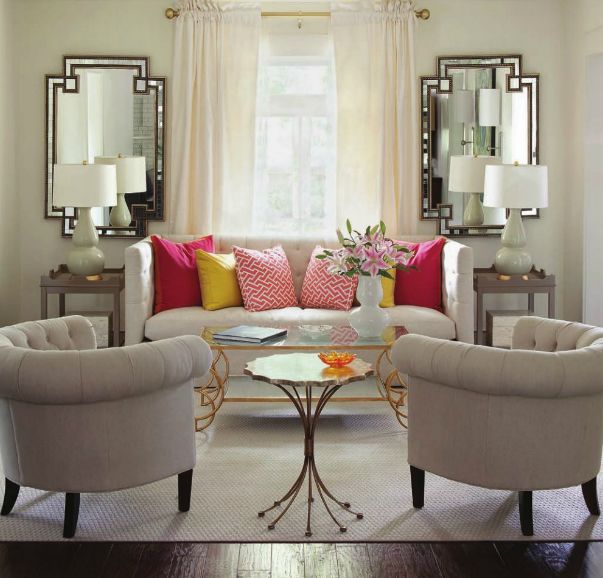
Symmetrical balance is when both sides of a composition have equal visual weight. The opposite of having a balanced design is another type of balance called off-balance (also known as discordant). This is a tricky one, as it’s a beautiful mix of chaos and order. The Atlantic’s website is an excellent example of this. It seems to be lacking in the balance department and, at the same time giving off an appealing look. Symmetrical balance is the most common type of balance.
Access this chapter
When the power is highest, we have the best chance of detecting differences among the means across treatment combinations when the means truly are different. A regular, uniform, balanced design may be referred to as a \((b, v, r, k, λ)\)-design. So our disease treatments for the mice formed a \((7, 7, 3, 3, 1)\)-design. A balanced design is a design in which every pair of points appear together in the same number of blocks, \(λ\).
How to Include Balance in Web Designs
Break up symmetrical forms with a random mark to add interest. Contrast symmetry and asymmetry in your composition to make elements get more attention. Symmetrical balance occurs when equal weights are on equal sides of a composition, balanced around a fulcrum or axis in the center. Symmetrical balance evokes feelings of formality (it’s sometimes called formal balance) and elegance. A wedding invitation is a good example of a composition that you’d likely want to be symmetrically balanced. Finding and incorporating the right balance in design can be a little complicated, especially if you want to implement one of the rarer types of balance into your art.
The larger the size of the design elements, the heavier the visual weight will be. In a balanced design, elements of different visual weights are strategically arranged such that every element has a role to play. Instead of trying to work individually, these elements all work as a whole to attain the ultimate goal of the design. Any good designer knows that balance in a design counts for a lot. If you look at a design composition and feel that something is off kilter, chances are that there isn’t balance amongst the elements. As they each have different visual weights, how they are placed is vital.
Balance: Benefit or Bluff? Page 3 - Stereophile Magazine
Balance: Benefit or Bluff? Page 3.
Posted: Tue, 20 Sep 2016 01:06:26 GMT [source]
Platt College School of Graphic Design’s Bachelors Degree Program in Visual Communication helps you build the skills you need to start an exciting new career. We at Platt College continuously update our offerings to best serve the needs of students and employers in today’s dynamic Southern California business environment. Have you ever looked at a web page and felt that it is too cluttered? So much that you had to scour the page meticulously to find what you were looking for! If that has happened, blame it on the lack of visual balance. The solid black section in a contrasting color elegantly balances the grandeur of the textured gold accent in the background.
This doesn’t mean you should avoid creating tension altogether, but it should be used with caution and intent. The actual design has visual weight distributed evenly on both sides of the page. By using the same colored squares as the previous example, we can see how contrast can drastically change our perception of color. A darker red background reduces contrast for the left square and increases contrast for the right square. This effectively switches our focus to the yellow square. For example, one reason we notice focal points is because they contrast with the elements around them.
The Balance Principle of Design: Why Balance In Design Is So Important
And thus a major share of your attention falls on the product. To balance the large element the other bubbles, featuring the ingredients, are made smaller. Visual weight can be altered by the size, color, contrast and/or the density of an element. Assuming all else is equal, let’s see how each of these factors have an impact on visual weight. Much in the same way that similarity and contrast work together, you can combine symmetry and asymmetry to good effect. Balance symmetrical forms in an asymmetrical way, or balance asymmetrical forms symmetrically.
Geometric shapes like circles and squares have different visual weights in design. Squares, rectangles, and polygons with rigid corners appear heavier than circles. And irregular shapes appear even lighter in visual weight. There is a fluidity in these shapes due to which their visual weights are less. In contrast to symmetry, which can be a bit monotonous, asymmetry can be used to make a design more dynamic and lively. In the example above, Ricardo Mestre pulls off a pleasant and coherent design with asymmetrical balance.
When a composition is visually balanced, every part of it holds some interest. The visual interest is balanced, which keeps viewers engaged with the design. On the other hand, if you want to hire a professional graphic design agency to bring your artistic idea into reality, our expert designers are here to help you. With years of experience helping clients from a number of industries, they are well versed in creating designs that appeal to the target demographic. Radial balance refers to the placement of design elements around a central point or nucleus.
His paintings are great examples of the phrase “calm in chaos”. Knowing each one of these and the purposes they serve is the best way to use each to your advantage. Before we dive into them, let’s take a look at some of the history behind balance in design and its significance. Note that the least squares means for treatments when using PROC Mixed, correspond to the combined intra- and inter-block estimates of the treatment effects.
There are close to equal areas of color and space on both sides (right and left) to balance each other. It might also stand out a little after you’ve seen it, but overall the elements don’t call attention to themselves individually. The images at the top of Hirondelle USA’s home page rotate. I grabbed a screenshot of this one specifically to talk about the asymmetrical balance established at the top of the page. The home page of Carrie Voldengen’s portfolio exhibits an overall asymmetrical balance around a dominant symmetrical form. Looking at the overall composition, I see several discrete shapes.
We love to innovate businesses with new age technologies, allowing them to improve their visual reputation. Balancing a design using color is one of the simplest way to tweak your design’s balance. Mosaic balance can be construed as simply, finding order within the chaos. Essentially, this type of balance requires a rare genius to implement, as it requires the designer to create a sense of order and symmetry out of complete disarray. This is how asymmetry can be used in art to bring balance in designs you want to create, without conforming to the somewhat boring symmetry we often see around us.




No comments:
Post a Comment